From Ancient Roots to Greek Icon: The Moussaka Story
Moussaka. The very name conjures images of bubbling, golden-crusted comfort, deeply intertwined with the sun-drenched landscapes and vibrant culinary traditions of Greece. For many, this layered masterpiece of eggplant, spiced meat, and creamy béchamel is the quintessential Greek dish, a symbol of hospitality and heritage. Yet, the story of
moussaka is far richer and more complex than its modern association suggests, a culinary odyssey that spans centuries, cultures, and continents, tracing its origins from ancient Baghdad to the heart of the Ottoman Empire before finally becoming the global icon we cherish today.
Tracing Moussaka's Ancient Roots: A Journey from Baghdad to the Ottoman Empire
The narrative of moussaka begins not in the tavernas of Athens, but in the bustling markets and sophisticated kitchens of the medieval Middle East. The name "moussaka" itself offers the first clue to its deep historical lineage, deriving from the Arabic term
musaqqâ (مسقعة), which literally means "moistened" or "chilled." This intriguing etymology hints at an earlier form of the dish, perhaps served cold or characterized by its succulent, liquid-infused preparation, a far cry from the hot, baked casserole we know today.
This Arabic root journeyed into Ottoman Turkish as
musakka, and from there, it disseminated across the vast expanse of the Ottoman Empire, influencing a myriad of regional cuisines. As the name spread, it underwent local linguistic adaptations, leading to variations like the Greek
mousakás (μουσακάς), the Serbian
musaka, and the Levantine Arabic
musaqa'a. This linguistic evolution underscores the profound culinary exchanges facilitated by the empire, which not only shared ingredients and techniques but also standardized names that reflected their shared heritage.
The earliest identifiable ancestor of moussaka is believed to be a 13th-century recipe from Baghdad called
maghmuma. This ancient dish combined aubergines (eggplants) with spiced ground meat, creating a hearty and flavorful stew. Importantly, this precursor lacked the defining béchamel topping that is synonymous with modern moussaka. Instead, it was a simpler, more rustic preparation, reflecting the culinary practices of its time and region. As the
maghmuma concept traveled and evolved through the Ottoman Empire, it adapted to local tastes and available ingredients, frequently appearing as a robust stew in Turkish, Balkan, and Levantine cuisines, often without any creamy top layer, maintaining its identity as a comforting, vegetable-and-meat-based preparation.
The Greek Transformation: Nikolaos Tselementes and the Iconic Béchamel
While moussaka’s origins are firmly rooted in Ottoman and Levantine culinary traditions, there's no denying that the modern, globally recognized version is inextricably linked with Greece. The transformation of a humble regional stew into an elaborate, layered casserole with a rich béchamel topping is largely attributed to one pivotal figure: Nikolaos Tselementes.
An influential Greek chef of the early 20th century, Tselementes studied in Vienna and had a profound appreciation for European culinary techniques, particularly those of French cuisine. His groundbreaking 1932 cookbook,
Odigos Mageirikis (Culinary Guide), became a cornerstone of modern Greek cooking. It was within the pages of this iconic book that Tselementes introduced a revolutionary change to moussaka: the incorporation of a creamy, French-inspired béchamel sauce.
This addition was a game-changer. The béchamel elevated moussaka from a relatively simple, rustic dish into an elegant, sophisticated entrée. It provided a luxurious cap that not only added a new dimension of flavor and texture but also visually enhanced the casserole, making it suitable for more formal dining and special occasions. Tselementes' innovation propelled moussaka into the national spotlight, solidifying its place as a cornerstone of Greek culinary identity and popularizing it worldwide. His vision transformed a historical dish into a modern masterpiece, a true testament to the power of culinary evolution.
The modern Greek moussaka, as refined by Tselementes, boasts a symphony of specific ingredients that contribute to its distinctive profile. Key components include:
- Eggplants (Aubergines): Often roasted or fried to remove excess moisture and achieve a tender texture.
- Potatoes: Typically parboiled and layered, particularly common in heartier northern Greek versions, adding substance and comfort.
- Ground Meat: Traditionally lamb or beef, or a combination, forming the savory heart of the dish.
- Tomatoes: Often fresh or canned, providing a tangy, rich base for the meat sauce.
- Red Wine: Used to deglaze and deepen the flavor of the meat sauce.
- Spices: A fragrant blend including cinnamon, oregano, allspice, and sometimes nutmeg, lending moussaka its characteristic warmth.
- Béchamel Sauce: A creamy topping made from milk, butter or olive oil, flour, and often enriched with eggs and grated hard cheese like Kasseri or Parmesan.
Mastering the Art of Moussaka: A Culinary Deep Dive
Creating an authentic Greek moussaka is a labor of love, a process of layering not just ingredients, but flavors and textures to achieve a harmonious and deeply satisfying result. It's a dish that rewards patience and attention to detail, transforming simple components into something truly extraordinary.
The journey begins with meticulous preparation of each layer:
1.
The Eggplant Foundation: Many recipes call for salting and resting sliced eggplants to draw out bitter moisture, followed by pan-frying or roasting until tender and slightly caramelized. This crucial step prevents the finished dish from becoming watery and soggy, ensuring a robust flavor base.
2.
The Rich Meat Sauce (Ragù): This is the soul of the moussaka. Ground lamb or beef is browned with finely chopped onions and garlic. Tomatoes, often fresh or canned and crushed, are added along with a splash of red wine, allowing the mixture to simmer and meld into a rich, thick sauce. The magic truly happens with the inclusion of warm spices – cinnamon is non-negotiable, often paired with oregano, allspice, and sometimes a hint of nutmeg. These spices impart a comforting depth that is distinctly Greek.
3.
The Potato Layer (Optional but Recommended): For many, parboiled or lightly fried potato slices form a crucial base or middle layer, offering a grounding earthiness and adding to the casserole's hearty appeal.
4.
The Dreamy Béchamel: This creamy, custardy topping is the crown jewel. A roux of butter (or olive oil) and flour is cooked, then gradually whisked with warm milk until thick and smooth. Many recipes enrich it further with beaten eggs and grated hard cheese (such as Kasseri, Kefalotyri, or Parmesan), creating a golden, irresistible crust upon baking.
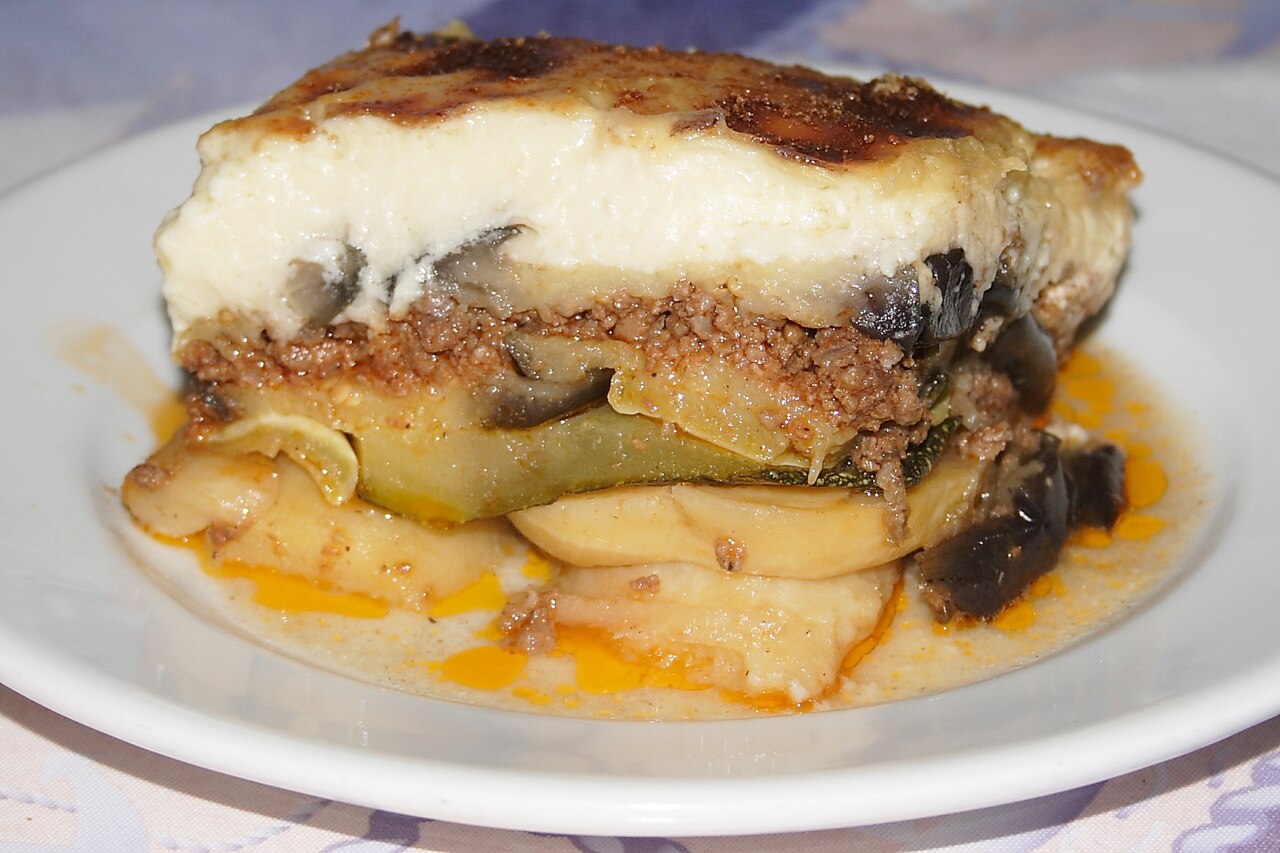
Once all components are prepared, the assembly begins: a layer of potatoes, followed by the cooked eggplant, then the generous, warmly spiced meat sauce, and finally, a lavish blanket of béchamel. This carefully constructed tower is then baked until golden, bubbly, and fragrant, typically taking about 1.5 to 2 hours.
For truly authentic results, remember these essential tips:
- Moisture Control is Key: Ensure your eggplant is well-drained and cooked down, and your meat sauce is thick, not watery, to prevent a soupy moussaka.
- Embrace the Spices: Don't shy away from cinnamon and allspice in the meat sauce; they are defining characteristics of Greek moussaka.
- Master the Béchamel: Whisk constantly to avoid lumps and achieve a silky-smooth consistency.
- Patience Pays Off: After baking, resist the urge to cut into it immediately. Allowing the moussaka to rest for at least 15-20 minutes lets the layers set, making for cleaner, more elegant slices. For more in-depth guidance on achieving moussaka perfection, check out our guide on Mastering Authentic Greek Moussaka: A Layered Casserole Guide.
Beyond Borders: Regional Variations and Modern Adaptations
While the Tselementes-inspired Greek moussaka has captured global hearts, it's important to remember the dish's diverse family tree. Across the Balkans and the Middle East, variations abound, often reflecting the simpler, pre-béchamel forms. Turkish
musakka, for instance, frequently appears as a single layer of vegetables and meat, baked or cooked as a stew, without the creamy topping. Similarly, many Levantine versions are lighter, often served chilled or at room temperature, embracing the "moistened" aspect of its Arabic namesake.
Even within Greece, regional differences exist:
- In Northern Greece, particularly Macedonia, moussaka often features a more substantial potato layer, sometimes even completely replacing the eggplant.
- In the Cyclades islands, creative chefs might incorporate local vegetables like artichokes into their moussaka.
- Meat-free versions are also increasingly popular, adapting the core concept for modern dietary preferences. Lentils, mushrooms, or even textured vegetable protein (TVP) can replace the ground meat, offering delicious vegan or vegetarian alternatives that still capture the essence of the dish. Similarly, gluten-free flour can be used for the béchamel, making moussaka accessible to those with dietary restrictions.
Moussaka transcends mere sustenance; it is a cultural ambassador. It embodies Greek culinary identity, seamlessly blending ancient Levantine influences with Ottoman and Western European elements. It remains a staple in Greek festivals, family gatherings, casual diners, and within diaspora communities worldwide, symbolizing hospitality, shared heritage, and the enduring power of a truly magnificent meal.
Conclusion
From its humble beginnings as a spiced eggplant and meat stew in 13th-century Baghdad, through its dissemination across the vast Ottoman Empire, to its iconic transformation by Nikolaos Tselementes in 20th-century Greece, the moussaka story is a testament to culinary evolution. It is a dish that has absorbed influences, adapted to new tastes, and ultimately emerged as a beloved comfort food, a celebratory centerpiece, and a powerful symbol of Greek culture worldwide. Whether you prefer the classic Greek layered casserole or explore its many regional and modern adaptations, moussaka offers a delicious journey through history, flavor, and tradition, proving that some dishes are truly timeless.